Personal project
A four-model AI pipeline for trading card collection.
Every card passes through four AI models before it gets a valuation — three running fully local on a GB10 AI PC, and a fourth handled by Cade, my card specialist agent on a completely separate machine using ChatGPT 5.5. The identification stack alone totals nearly 100GB of models. This is what happens when you stop using AI as a tool and start designing it as infrastructure.
View card inventory ↗
How it works
Four models. Multiple cards at once.
Most collectors use one app that queries a single price database. This pipeline runs four specialized AI models across two machines — up to 4 concurrent workers on the GB10 for identification, 8 parallel workers on the Lenovo for comps — processing multiple cards simultaneously at every stage.
llama3.2-vision:11b ~12 GB Phase 1 & 2 visual scan — front and back GB10 (local) Up to 4 concurrent qwen2.5:32b ~20 GB Text reader — serial numbers, fine print, set IDs GB10 (local) Concurrent with 11b llama3.2-vision:90b ~62 GB Deep ID — flagged cards only, full checklist prompt GB10 (local) One at a time, exclusive ChatGPT 5.5 — Cade — comparable sales, market movement, valuation Lenovo (separate system) 8 parallel workers Scan from anywhere.
A custom iPhone app I built lets me scan cards from anywhere — at a show, at home, in a box of cards I haven't touched in years. The image hits my GB10 over the local network and lands in an intake folder. The pipeline wakes up automatically.
Custom iOS app
Fast visual scan — front and back.
llama3.2-vision:11b (~12 GB) runs on every card, up to 4 at once. It reads the front
for slab detection, serial numbers, parallel finish, autograph presence, and patch — then flips
to the back for player name, year, brand, set, and card number. Fast and parallel by design.
GB10 · 11b · ×4
Text reader runs at the same time.
While the vision model scans the image, qwen2.5:32b (~20 GB) runs concurrently
to extract fine-print text — serial numbers, edition lines, copyright strings, and set identifiers
that a vision model reads but may not interpret precisely. Two models, one card, simultaneous.
GB10 · 32b
Deep identification. One card at a time.
llama3.2-vision:90b (~62 GB) runs exclusively on flagged cards — parallels,
graded slabs, numbered prints, signed cards, patch relics. It uses a full checklist-constrained
prompt loaded with known parallel names for the specific set, so it doesn't guess — it matches.
This model runs one card at a time with no concurrency. It earns that exclusivity.
GB10 · 90b · ×1
Comps on a completely separate machine.
Once all local models finish, the card data lands in a folder the Lenovo watches. When new entries appear, Cade triggers — a purpose-built card specialist agent running on ChatGPT 5.5. Cade pulls comparable sales, reads recent market movement, and returns a structured valuation with confidence context. Completely separate system, completely separate model. The GB10 and the Lenovo share nothing except a watched folder.
Lenovo · Cade · GPT-5.5
+ Cade identification then comps
Why run it locally
Speed, cost, and control.
Both systems run multiple workers simultaneously. On the GB10, llama3.2-vision:11b
handles up to 4 cards concurrently alongside qwen2.5:32b for text — the 90b model
gets exclusive single-card access when flagged cards need it. On the Lenovo, Cade runs
8 parallel workers, pulling comps on multiple cards at the same time.
Cade uses ChatGPT 5.5 for comps — market intelligence that requires current eBay sold data, live price movement, and condition-adjusted comparables. Identification stays local. Market knowledge goes to the model built for it.
Automatic flagging
Special cards get special handling.
The light visual model is trained to flag four card types the moment they're detected. Flagged cards are queued for the large image model immediately — they don't wait for the standard batch.
Color variants and refractors — visually similar to base cards but with significant value differences. Early detection matters.
Relic cards with embedded jersey, patch, or equipment pieces. Patch quality directly affects comp value.
Autographs — whether on-card or stickered — require authentication context before any valuation is attempted.
Print-run limited cards where the serial number directly determines scarcity tier and comparable pool.
Embedded memorabilia cards — jersey swatches, bat chips, equipment pieces — where relic type and size affect grade and value.
More from the collection
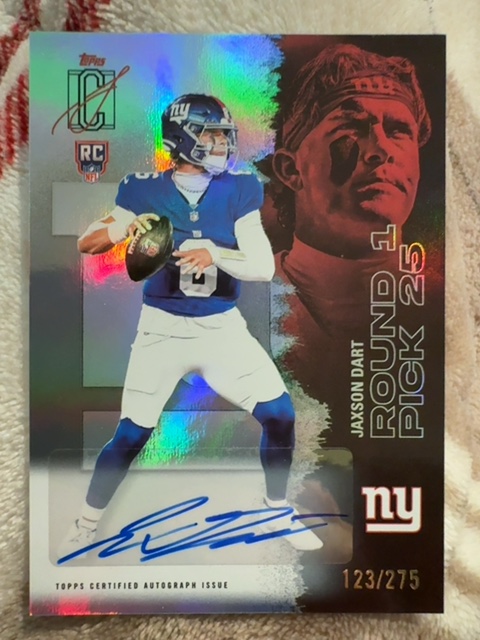
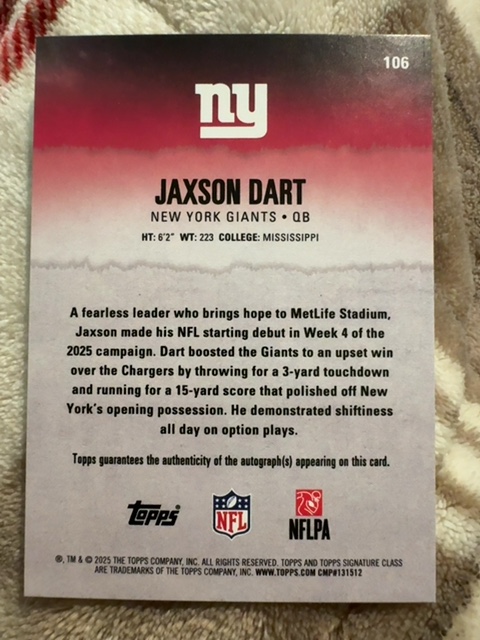
2025 Topps Signature Class — Jaxson Dart #106. Flagged for autograph + numbered /275. Giants QB with Year 1 upside.
"Raw/no slab seen. Exact Silver /275 Dart autos are thin but this is the Giants QB chase from a premium auto product; hold unless someone pays $550+."
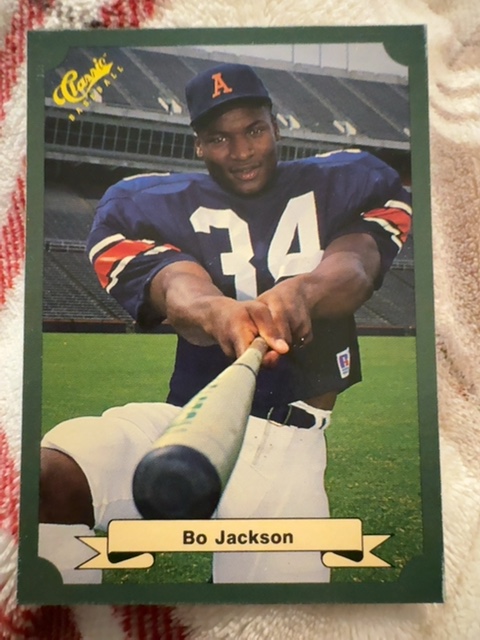
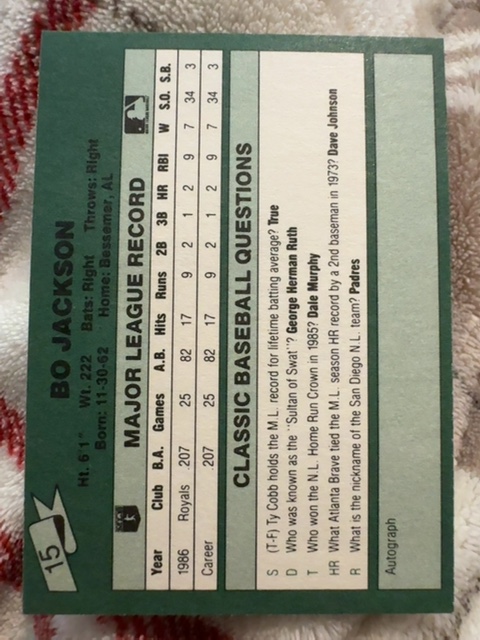
Classic Baseball — Bo Jackson. Auburn jersey, green border. Two-sport legend card from the Classic brand.
"Pricing at the high end of recent comps to maximize potential profit given Bo Jackson's collectibility."
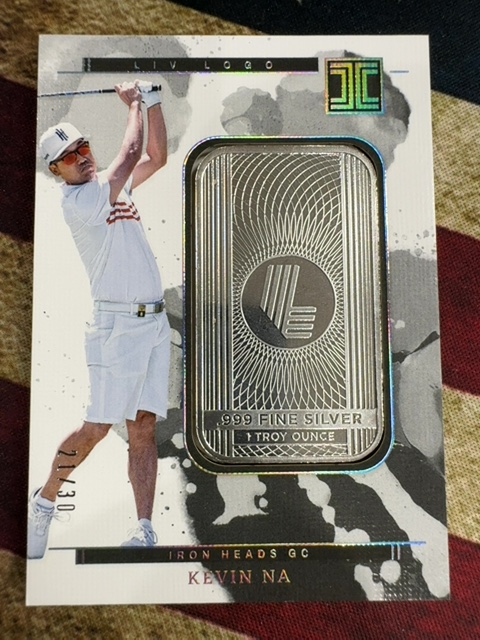
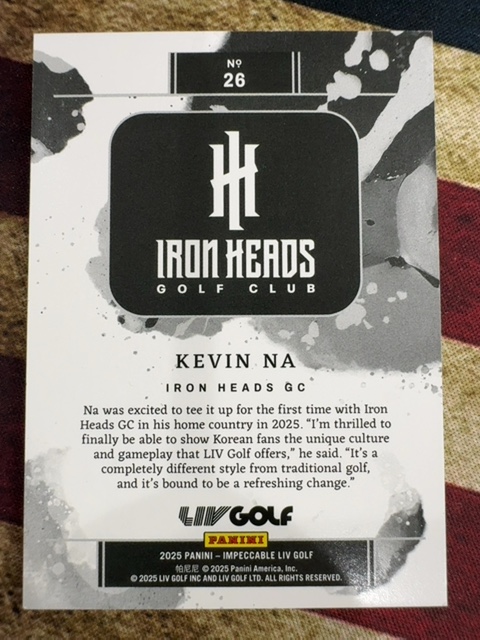
2023 Panini Impeccable — Kevin Na #26. Actual silver embedded in the card stock, numbered /30. Golf. Flagged for numbered + rare parallel.
"Pricing at the high end due to its numbered /30 scarcity and the strong demand for parallels in golf sets."
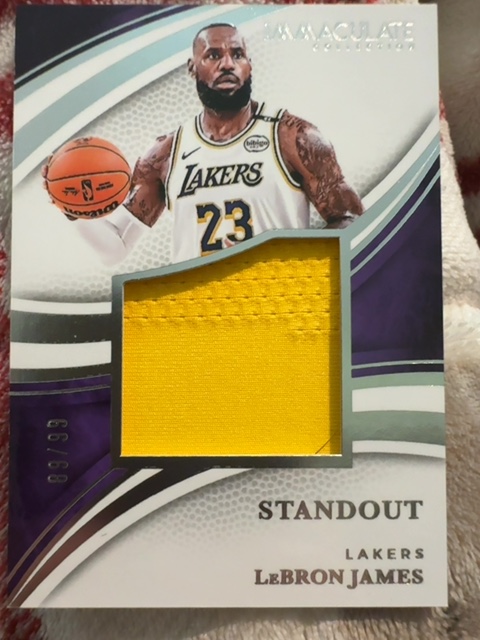
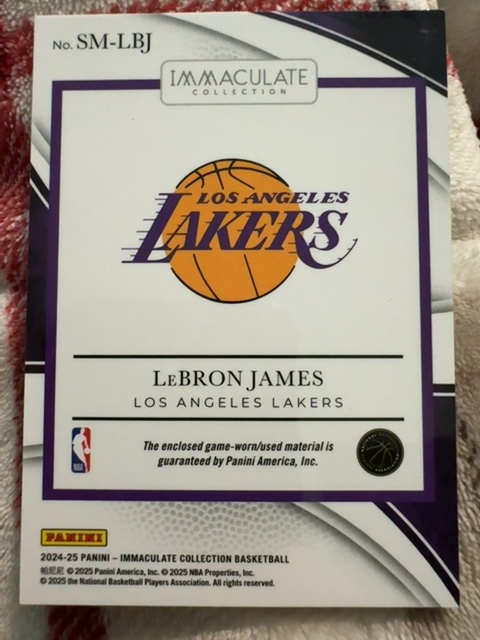
2024 Panini Immaculate Collection — LeBron James SM-LBJ. Gold parallel, numbered /99. Flagged for parallel + numbered.
"Pricing at the high end of recent comps due to the scarcity and desirability of the Gold parallel, numbered /99, for a hot player like LeBron James."
Current inventory
Every card that's been through the pipeline.
The live inventory tracks each card, its AI-generated identification data, Cade's comp, and current market range. It reads straight from the GB10 card database and updates as scans complete.
Open card inventory ↗The iPhone app
Built for scanning anywhere, not just at a desk.
The iOS app was built from scratch to solve one specific problem: I needed to be able to scan a card at a show, in a trade situation, or out of a box in the garage and have the pipeline start running before I get home. The app sends the image directly to the GB10 over the local network and shows a status update when each model finishes.
There's no subscription. No card database API. Just a camera, a local network, and four models that know what they're looking at.
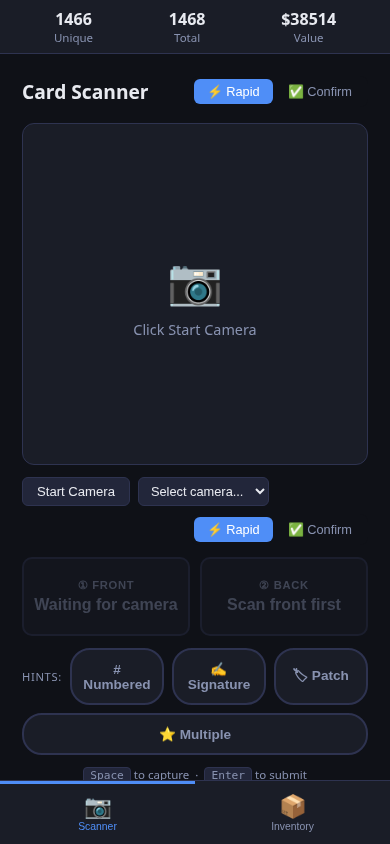
Card Vault — PWA added to iPhone home screen
Scan any card from anywhere — the pipeline starts the moment the image lands on the GB10.
Contact handoff
For speaking, media, or collaboration inquiries, get in touch.
Reach out directly by email or phone. For speaking and media requests, include the event, audience, format, and date so the inquiry can be routed quickly.